There is a common misconception that helping vulnerable people simply means giving them what they lack. While generosity is important, true support goes much deeper than charity. It begins with recognizing that every person—regardless of their circumstances—deserves to be treated with dignity, respect, and compassion.
Whether someone is experiencing poverty, living with a disability, recovering from a disaster, facing unemployment, or struggling with mental health challenges, they are more than their situation. They are individuals with dreams, talents, potential, and an inherent worth that should never be diminished.
As communities, organizations, and individuals, it is time to rethink how we support vulnerable people. Instead of responding with pity, we should respond with dignity. Instead of creating dependence, we should create opportunities for empowerment.
What Does It Mean to Support with Dignity?
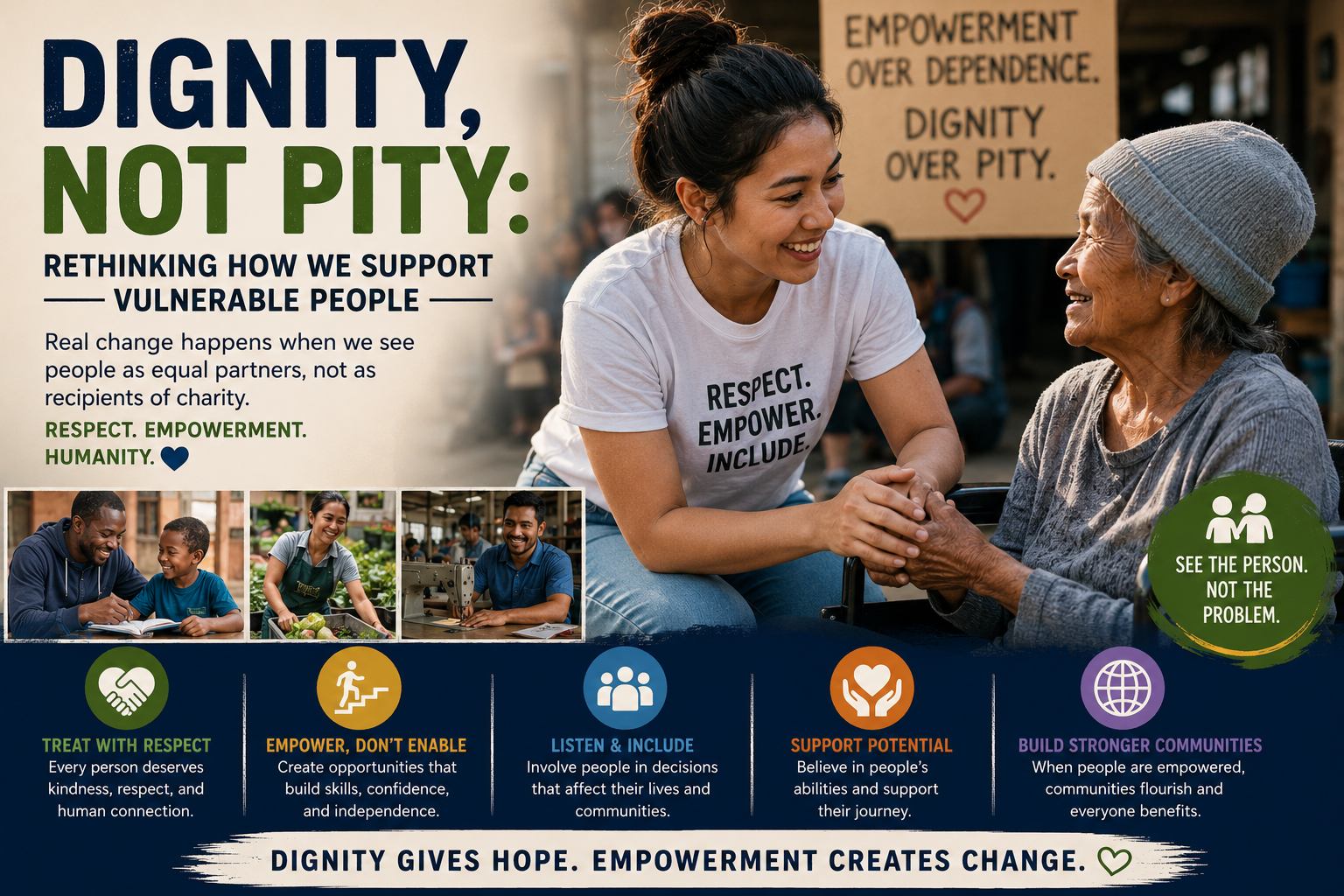
Supporting with dignity means seeing the person before the problem.
It means recognizing that vulnerability is often a temporary circumstance—not an identity. Every individual deserves to be heard, respected, and included in decisions that affect their lives.
Dignity-centered support asks important questions such as:
- How can we restore hope instead of simply meeting immediate needs?
- How can we empower people to rebuild their own lives?
- How can we preserve a person's self-worth while offering assistance?
True compassion protects both the needs and the dignity of those we serve.
The Difference Between Pity and Compassion
Pity often focuses on what people lack.
It can unintentionally create feelings of helplessness or reinforce the idea that vulnerable individuals are incapable of helping themselves.
Compassion, however, recognizes our shared humanity.
"I see your struggle, but I also see your strength."
Compassion listens before acting. It respects personal choices and works alongside people rather than above them.
When support is rooted in compassion instead of pity, it becomes a partnership instead of a rescue mission.
Empowerment Creates Lasting Change
Meeting immediate needs is important, especially during emergencies.
Food, shelter, medical care, and financial assistance can save lives.
However, lasting impact comes from helping people regain independence and confidence.
Empowerment can take many forms:
- Providing education and training
- Teaching practical life skills
- Supporting entrepreneurship
- Creating employment opportunities
- Offering mentorship and guidance
- Investing in young people
- Encouraging leadership within communities
When people are equipped with knowledge and opportunities, they become active participants in changing their own lives.
The greatest form of assistance is often helping someone discover that they are capable of achieving more than they imagined.
The Importance of Respect
Respect should never depend on someone's financial situation or social status.
Everyone deserves:
- To be spoken to with kindness
- To have their opinions valued
- To maintain their privacy
- To make their own decisions whenever possible
- To be treated as equals
Simple acts of respect can restore confidence to someone who has experienced rejection, discrimination, or hardship.
Sometimes, the way we help is just as important as the help itself.
Human-Centered Aid
Human-centered aid places people—not programs—at the heart of every decision.
Instead of assuming what communities need, organizations take time to listen.
Instead of delivering one-size-fits-all solutions, they work together with local people to create meaningful and sustainable change.
Human-centered aid values:
- Participation
- Inclusion
- Collaboration
- Transparency
- Cultural understanding
- Long-term sustainability
When people are involved in shaping solutions, they are more likely to succeed and create lasting impact.
Building Communities That Lift People Up
Strong communities are built when everyone has the opportunity to contribute.
Supporting vulnerable people is not about separating "those who help" from "those who need help."
Life is unpredictable.
At different points in our lives, any one of us may need support.
Today you may be giving.
Tomorrow you may be receiving it.
Recognizing this shared humanity encourages humility, empathy, and kindness.
Communities thrive when people stand beside one another instead of looking down on one another.
A Faith-Based Reflection
Many faith traditions teach that every human being is created with inherent value and purpose.
Acts of kindness should never strip people of their dignity.
Instead, they should restore hope, affirm worth, and reflect genuine love.
Serving others is not about demonstrating superiority—it is about expressing compassion.
It reminds us that every act of service should uplift, encourage, and empower those who are struggling.
When we help others with humility and respect, we reflect the very values that strengthen humanity.
From Me to You
Never make someone feel small because they need help.
One difficult season does not define a person's future.
The hand you extend today should never rob someone of their dignity tomorrow.
Choose words that encourage.
Choose actions that empower.
Choose compassion over judgment.
Remember that every person you meet carries a story you may never fully understand.
Sometimes, the greatest gift you can offer is not money or material possessions—but respect, hope, and the belief that someone still matters.
Conclusion
Supporting vulnerable people is about far more than meeting immediate needs—it is about restoring dignity, creating opportunities, and inspiring hope.
When aid is rooted in respect, empowerment, and compassion, lives are transformed in ways that extend far beyond temporary relief.
Every person deserves to be seen not for their struggles, but for their potential.
As individuals, communities, and organizations, let us move beyond pity and embrace a human-centered approach that uplifts, empowers, and restores.
Because real change begins when we stop asking, "What can I give?" and start asking, "How can I help someone rise?"
At the heart of every compassionate society is this simple truth:
People don't just need our help—they need our respect, our belief in their potential, and the opportunity to thrive with dignity.