INTRODUCTION
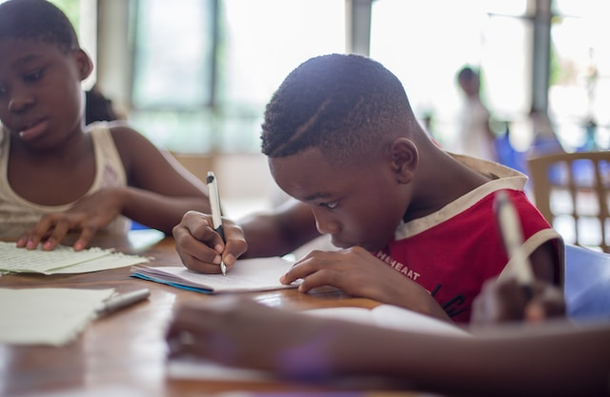
Every child, regardless of their socio-economic status or where they live, has a fundamental right to education. The number of out-of-school children (OOSC) in Nigeria has seen a concerning increase in recent years, with the figure reaching approximately 10.5 million children.According to data from the UNESCO Institute for Statistics (UIS), this is the highest number of out-of-school children ever recorded by any country.
UNICEF's 2022 report also confirms the high rate of out-of-school children in Nigeria, with one in every five out-of-school children worldwide being Nigerian. The situation is particularly dire in Northern Nigeria compared to other regions, where the net school attendance rate is as low as 53%, indicating a significant risk of dropout. Despite the federal government's efforts to make education free and compulsory up to the junior secondary level, challenges persist.
These high out-of-school rates in Northern Nigeria are primarily linked to conflict and other disruptions, though socio-cultural norms and economic barriers also contribute significantly. Girls are disproportionately affected by conflict situations and crises, with extremely low primary school attendance rates in the conflict-ridden North-Eastern and North-Western regions, as reported by UNICEF in 2022. The UNESCO Institute for Statistics (2022) categorizes children, adolescents, and youths as out-of-school if they are not enrolled or attending school during an academic year. UNICEF and UNESCO (2015) classify these children into two groups: those who entered school but dropped out, and those who have never entered school.
The latter group is further divided into two subgroups, including children who will enter school late and those who will never enter. The term "never entered school" refers to children with no exposure to formal education. Delayed school entry, labeled as "will enter school late," can increase the risk of dropping out or low academic achievement, as outlined by UNICEF and UNESCO in 2015.
The low allocation of funds to the Nigerian education sector has been a longstanding issue, with funding consistently falling below the 15% minimum recommended by UNESCO. This underfunding has resulted in inadequate learning environments, lack of necessary resources, and understaffing in public schools, while those with means often opt for private education. The financial burden posed by Nigeria's supposedly free public schools often compels parents to face tough decisions concerning their children's education. With the ongoing economic difficulties in the country, it becomes exceedingly challenging for financially strained parents to cover the costs associated with schooling. Consequently, numerous kids from disadvantaged regions are denied their access to education. This unending cycle of poverty and educational deprivation perpetuates inequality and constrains the prospects for a brighter future among children.
This article explores the impact of education incentives for underserved communities (in Nigeria). It highlights how investing in education incentives can break the cycle of of poverty, empower individuals, and uplift entire communities.