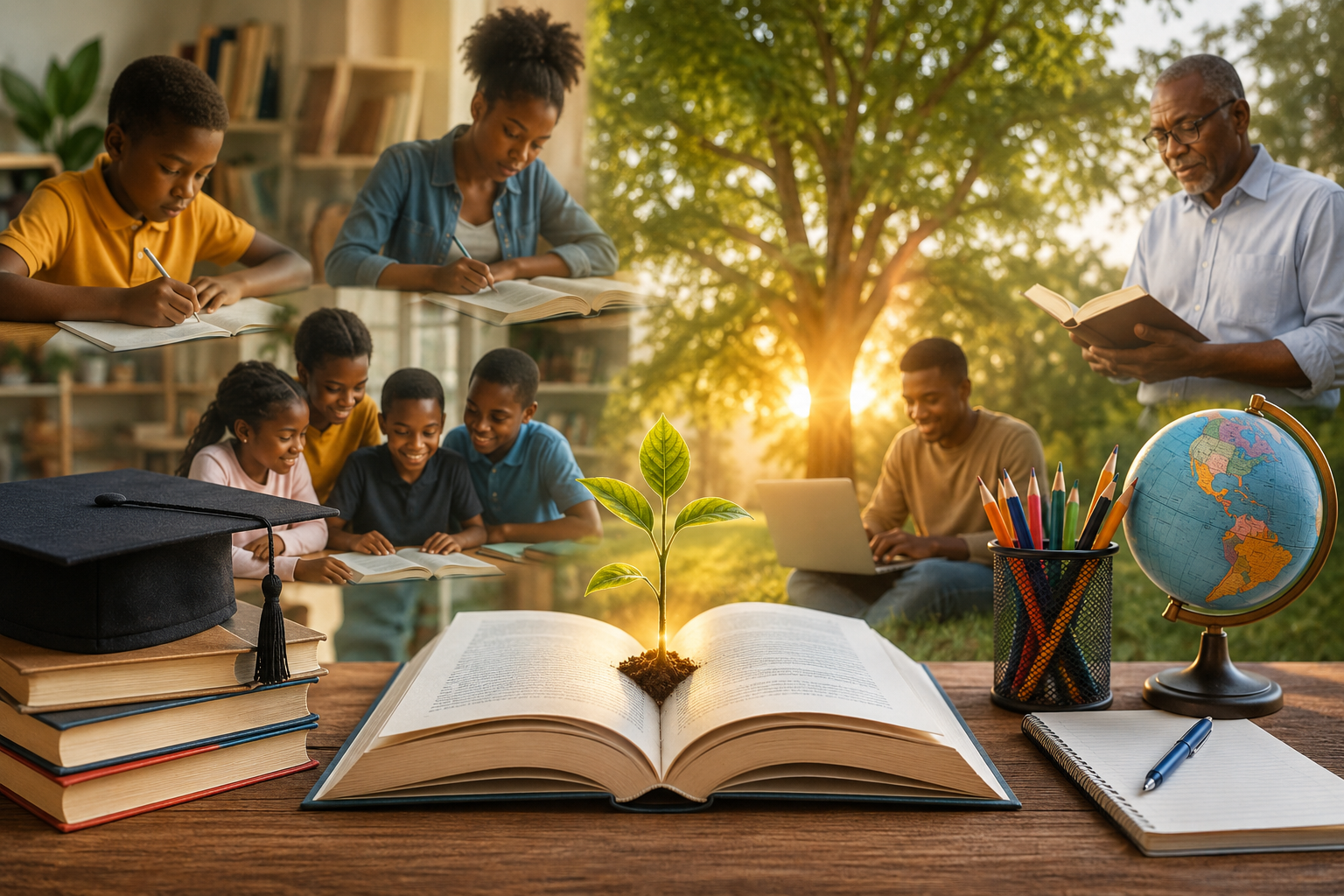
“Education is not simply about filling minds with information—it is about shaping lives, building character, and preparing people to make meaningful contributions to society.”
Every morning, millions of children and young people put on their uniforms, carry their books, and head to school with hopes for a brighter future. Parents work hard to pay school fees, teachers dedicate themselves to guiding learners, and communities invest in educational institutions because they understand the value of education.
But an important question remains:
Is education only about attending school?
For many years, education has often been measured by grades, certificates, examinations, and academic achievements. While these are important, true education goes far beyond classrooms, textbooks, and report cards.
Education is not only about what people know.
It is also about who they become.
A truly educated person is someone who possesses knowledge, demonstrates good character, thinks critically, and continues learning throughout life.
In a rapidly changing world, understanding the deeper meaning of education has never been more important.
Education Begins with Knowledge
Knowledge is one of the foundations of education.
Schools provide opportunities to learn subjects such as mathematics, science, languages, history, technology, and the arts. These areas of learning help individuals understand the world around them and develop skills for future careers.
Knowledge empowers people to:
- Solve problems.
- Make informed decisions.
- Develop useful skills.
- Understand different cultures and ideas.
- Contribute positively to society.
Education opens doors to opportunities and gives people the tools they need to improve their lives and support their communities.
However, knowledge alone is not enough.
A person may possess information but still struggle to use it wisely.
That is why education must also focus on character.
Character: The Heart of True Education
Character shapes how people use their knowledge.
Qualities such as honesty, integrity, kindness, responsibility, discipline, and respect are essential for building healthy families, workplaces, and communities.
Education should help individuals learn not only how to succeed but also how to live well and treat others with dignity.
Strong character helps people:
- Make ethical decisions.
- Show respect for others.
- Take responsibility for their actions.
- Demonstrate compassion.
- Contribute positively to society.
A society needs more than intelligent people.
It needs people who use their intelligence with wisdom and integrity.
Teachers, parents, faith communities, and mentors all play important roles in helping young people develop strong values.
When knowledge and character work together, individuals become leaders who inspire trust and create positive change.
The Importance of Critical Thinking
We live in a world filled with information.
News, social media, technology, and online platforms provide constant access to ideas and opinions. While this creates opportunities, it also presents challenges.
Not everything we hear, read, or watch is accurate.
This is why critical thinking is an essential part of education.
Critical thinking means the following:
- Asking thoughtful questions.
- Evaluating information carefully.
- Solving problems logically.
- Considering different perspectives.
- Making informed decisions.
Critical thinkers do not accept information blindly.
They seek understanding.
They analyze situations carefully.
They ask:
- Is this information reliable?
- What evidence supports this claim?
- What are the possible consequences?
These skills help individuals make wiser choices in education, work, relationships, and everyday life.
Communities become stronger when people learn to think clearly, responsibly, and independently.
Learning Does Not End After School
One of the greatest misconceptions about education is the belief that learning ends after graduation.
In reality, education is a lifelong journey.
The world is constantly changing.
New technologies emerge.
Industries evolve.
Societies develop.
People continue to encounter new experiences and challenges.
Lifelong learning means remaining open to growth at every stage of life.
People can continue learning through:
- Reading books.
- Taking courses.
- Learning new skills.
- Attending workshops.
- Listening to others.
- Exploring new ideas.
- Gaining experience through work and service.
Curiosity is one of the greatest gifts a person can possess.
Those who continue learning remain adaptable, informed, and prepared for the future.
Learning is not limited by age.
Every day presents an opportunity to grow.
The Role of Parents and Communities
Education does not happen only in schools.
Parents are often a child's first teachers.
Communities also influence values, attitudes, and behaviors.
Children learn through:
- Family conversations.
- Community experiences.
- Faith teachings.
- Friendships.
- Observation of role models.
Parents can strengthen learning by:
- Encouraging reading.
- Supporting curiosity.
- Teaching responsibility.
- Modeling good values.
- Creating positive learning environments.
Communities can contribute by:
- Supporting schools.
- Providing mentorship.
- Creating safe spaces for learning.
- Encouraging educational opportunities for all.
When schools, families, and communities work together, children receive a stronger foundation for life.
Education and Social Responsibility
True education encourages people to think beyond themselves.
It teaches responsibility toward others and society.
Educated individuals are often better equipped to:
- Solve community problems.
- Support vulnerable people.
- Promote peace and understanding.
- Respect diversity.
- Contribute to national development.
Education should inspire service, compassion, and active citizenship.
Knowledge becomes more meaningful when it is used to improve the lives of others.
A well-educated society is not only more prosperous—it is also more caring, responsible, and united.
A Faith-Based Reflection
Many faith traditions teach that wisdom is valuable and that learning is a lifelong pursuit.
Knowledge, when combined with humility and compassion, becomes a powerful force for good.
Education is not only about personal success.
It is also about using our gifts to serve others, promote justice, and contribute positively to our communities.
Learning helps us become better individuals, stronger families, and more compassionate societies.
From Me to You
If you are a student, remember that education is more than passing examinations.
It is about building knowledge, developing character, and preparing yourself to make a positive difference.
If you are a parent, continue encouraging curiosity and values in your children.
If you are a teacher, remember that your influence extends far beyond the classroom.
And if you are an adult, never stop learning.
Read.
Ask questions.
Explore new ideas.
Learn new skills.
Stay curious.
Because education is not a destination.
It is a lifelong journey.
Conclusion
Education is far more than attending school, passing examinations, or earning certificates.
It is the process of developing knowledge, building character, strengthening critical thinking, and embracing lifelong learning.
When education goes beyond classrooms, it transforms individuals, strengthens families, and builds healthier communities.
The world needs people who are informed, thoughtful, compassionate, and willing to keep learning throughout life.
Because at the heart of true education is a simple truth:
Education is not only about preparing for a career—it is about preparing for life.