Every day, people make countless decisions that affect their health—often without realizing it. The food we eat, the water we drink, the amount of sleep we get, how we manage stress, and even how often we wash our hands all contribute to our overall well-being.
Many illnesses that burden families and communities are not only treatable but also preventable. While modern medicine has made incredible advances in diagnosing and treating diseases, one timeless truth remains:
Prevention is better than cure.
Preventive healthcare is about taking simple, consistent steps to protect our health before problems arise. It empowers individuals to live longer, healthier, and more fulfilling lives while reducing the emotional and financial costs of illness.
In a world where healthcare systems are often stretched and medical expenses continue to rise, adopting healthy habits is one of the most valuable investments anyone can make.
Why Prevention Matters
Many health conditions develop gradually.
Heart disease, diabetes, obesity, high blood pressure, certain infections, and even mental health challenges often begin with small lifestyle choices repeated over time.
By practicing healthy habits consistently, individuals can significantly reduce their risk of developing many preventable diseases.
Prevention also offers benefits beyond physical health. It helps people maintain their independence, remain productive, spend more quality time with loved ones, and enjoy a higher quality of life.
Healthy communities begin with healthy individuals.
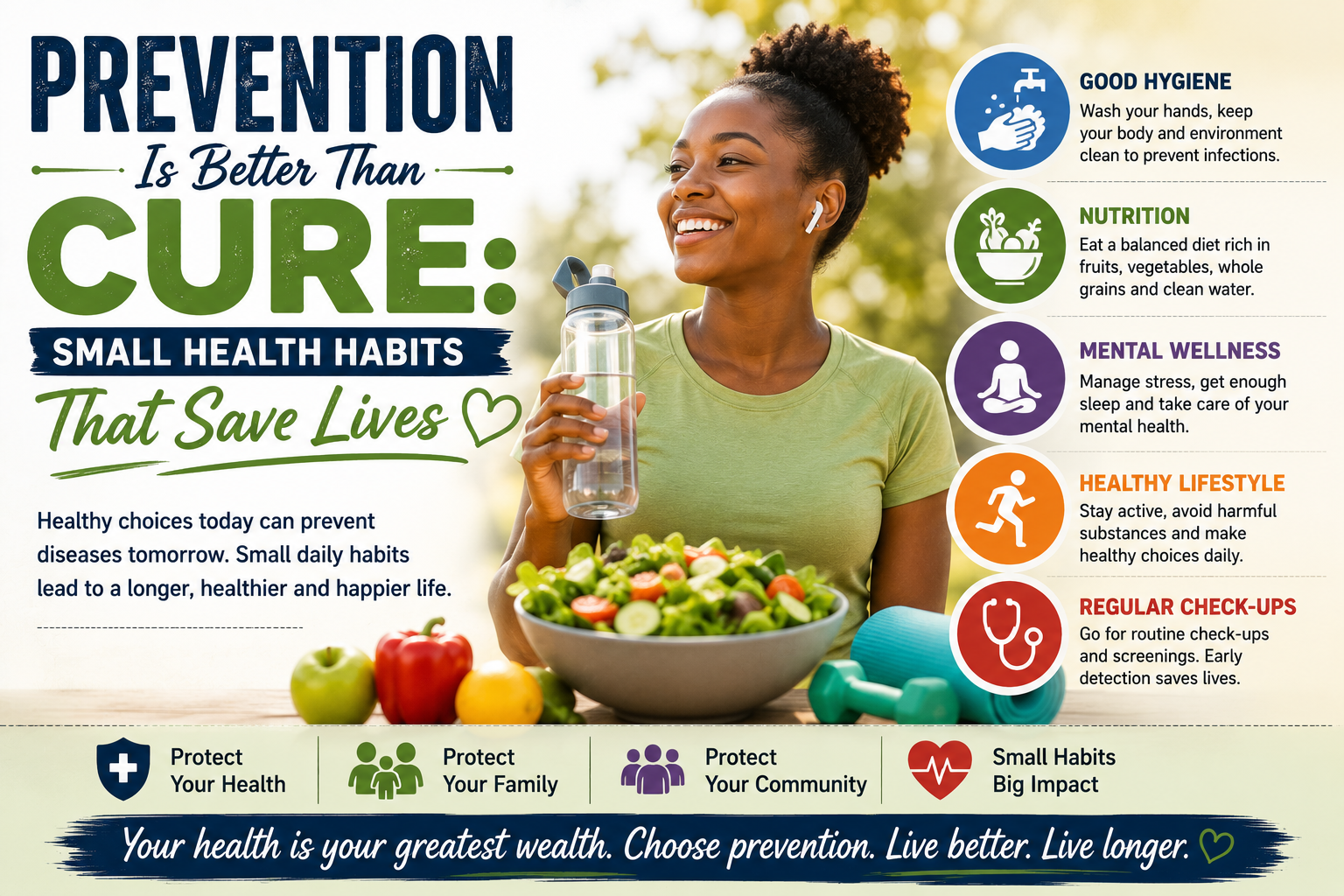
The Power of Good Hygiene
One of the simplest yet most effective ways to prevent illness is maintaining proper hygiene.
Basic hygiene practices help stop the spread of bacteria, viruses, and other harmful microorganisms that cause disease.
Healthy hygiene habits include:
- Washing hands regularly with soap and clean water.
- Brushing teeth twice daily.
- Bathing regularly.
- Keeping living environments clean.
- Properly handling and storing food.
- Covering the mouth and nose when coughing or sneezing.
These small actions protect not only individuals but also families, schools, workplaces, and entire communities.
Good hygiene saves lives every day.
Nutrition: Fueling the Body for Better Health
The human body depends on proper nutrition to function effectively.
A balanced diet provides the vitamins, minerals, proteins, healthy fats, and carbohydrates needed for growth, energy, and disease prevention.
Healthy eating habits include:
- Eating plenty of fruits and vegetables.
- Choosing whole grains over highly processed foods.
- Drinking enough clean water.
- Reducing excessive sugar and salt intake.
- Limiting unhealthy fats and sugary beverages.
- Eating balanced meals in appropriate portions.
Good nutrition strengthens the immune system, supports brain function, improves energy levels, and reduces the risk of chronic diseases.
Healthy eating is not about perfection—it is about making better choices consistently.
Mental Wellness Is Part of Overall Health
Health is more than the absence of physical illness.
Mental and emotional well-being are equally important.
Stress, anxiety, burnout, loneliness, and emotional exhaustion can affect both the mind and body if left unmanaged.
Simple mental wellness habits include:
- Getting enough sleep each night.
- Taking breaks from work and responsibilities.
- Spending time with supportive family and friends.
- Practicing gratitude.
- Engaging in hobbies and enjoyable activities.
- Talking openly about emotions.
- Seeking professional help when needed.
Caring for mental health is a sign of strength, not weakness.
A healthy mind supports healthier decisions in every area of life.
Healthy Lifestyle Choices That Make a Difference
Many life-changing health habits require little or no financial cost.
Simple lifestyle choices include:
- Engaging in regular physical activity.
- Walking whenever possible.
- Sleeping seven to nine hours each night.
- Avoiding tobacco products.
- Limiting alcohol consumption.
- Managing stress effectively.
- Attending routine medical check-ups.
- Following recommended vaccinations.
- Staying hydrated throughout the day.
These habits work together to improve physical health, increase energy, and reduce the likelihood of preventable illnesses.
Small actions performed daily often produce remarkable long-term results.
The Importance of Regular Health Check-Ups
Many illnesses develop silently before symptoms appear.
Regular medical check-ups allow healthcare professionals to detect potential health issues early, when treatment is often more effective.
Preventive health services may include:
- Blood pressure checks.
- Blood sugar testing.
- Cholesterol screening.
- Vision and hearing examinations.
- Cancer screenings.
- Routine vaccinations.
- General physical examinations.
Early detection saves lives.
Waiting until symptoms become severe often makes treatment more difficult and expensive.
Building Healthy Habits as a Family
Healthy living becomes easier when families support one another.
Parents and caregivers play an important role in teaching children lifelong healthy habits.
Families can promote wellness by:
- Preparing nutritious meals together.
- Encouraging outdoor play and exercise.
- Limiting excessive screen time.
- Practicing good hygiene together.
- Creating healthy bedtime routines.
- Supporting open conversations about emotional well-being.
Children often learn by observing adults.
Healthy families build healthier generations.
Communities Have a Role to Play
Preventive health is not only an individual responsibility.
Communities, schools, healthcare providers, organizations, and governments all contribute to creating healthier environments.
Communities can promote prevention by:
- Providing access to clean water and sanitation.
- Supporting health education programs.
- Organizing medical outreach and screenings.
- Encouraging physical activity through safe public spaces.
- Promoting mental health awareness.
- Supporting nutritious school feeding programs.
When communities invest in prevention, everyone benefits.
A Faith-Based Reflection
Many faith traditions teach that our bodies are gifts entrusted to our care.
Looking after our health is not simply about avoiding illness—it is about honoring life and being able to serve others with strength and purpose.
Choosing healthy habits reflects gratitude for the gift of life.
Acts such as eating wisely, resting adequately, caring for mental health, and seeking medical attention when necessary are forms of responsible stewardship.
Healthy living allows us to better care for ourselves, our families, and our communities.
From Me to You
You do not have to change your entire life overnight.
Start with one healthy habit.
- Drink more water today.
- Take a short walk.
- Choose a healthier meal.
- Wash your hands regularly.
- Take time to rest.
- Talk to someone you trust when life feels overwhelming.
These may seem like small choices, but over time they become powerful investments in your future.
Remember, the healthiest lives are rarely built through dramatic changes.
They are built through small, consistent decisions repeated every day.
Conclusion
Preventing illness is one of the most effective ways to protect our health, strengthen our communities, and improve our quality of life.
Proactive, small health habits significantly reduce the risk of major illnesses like cardiovascular disease and diabetes. Simple, actionable steps—such as daily movement, regular medical check-ups, and balanced nutrition—help prevent diseases before they start, saving lives, time, and money.
Healthcare is not only about treating disease—it is about promoting wellness.
Every healthy choice we make today has the potential to protect our tomorrow.
Because at the heart of every healthier family, stronger community, and brighter future is one simple truth:
Small health habits save lives. Prevention truly is better than cure.