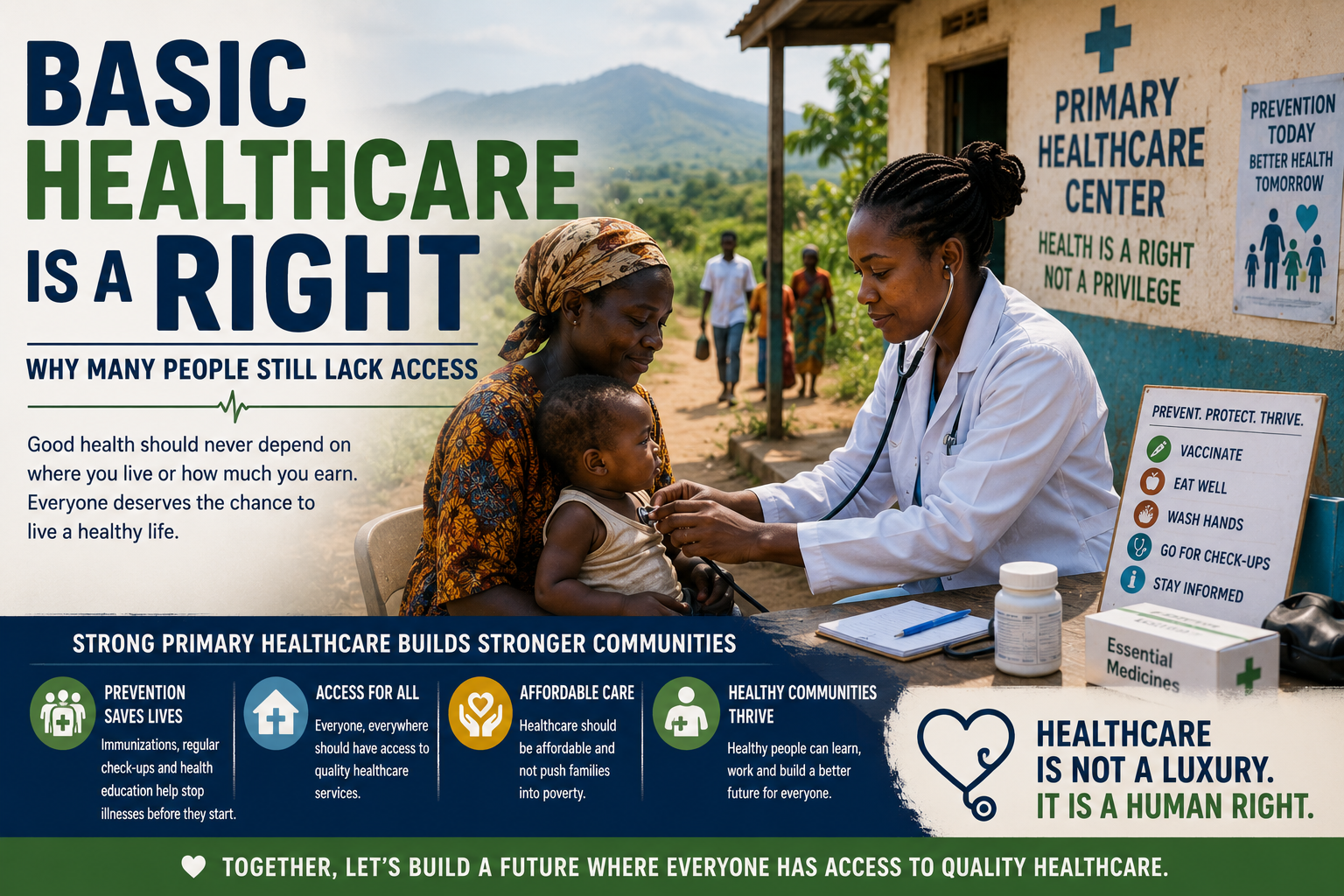
Health is one of the most fundamental human needs. Without it, people struggle to work, learn, care for their families, and contribute to their communities. Yet, despite remarkable advances in medicine and technology, millions of people around the world still face barriers to accessing even the most basic healthcare services.
For many families, visiting a health center is not a simple decision. It may mean traveling long distances, paying fees they cannot afford, or waiting until an illness becomes severe because help is simply out of reach.
Basic healthcare is not a luxury—it is a fundamental human right. Every person deserves the opportunity to live a healthy life, regardless of where they live or how much they earn.
What Is Basic Healthcare?
Basic healthcare, also known as primary healthcare, refers to the essential health services that people need throughout their lives. It focuses on preventing illness, promoting healthy living, diagnosing common conditions early, and providing treatment before problems become life-threatening.
Primary healthcare includes:
- Routine medical check-ups
- Maternal and child healthcare
- Vaccinations and immunizations
- Health education
- Treatment for common illnesses
- Mental health support
- Nutrition guidance
- Disease prevention and health screenings
Strong primary healthcare systems reduce the need for expensive hospital treatments and improve overall community well-being.
The Challenges Facing Rural Communities
For people living in urban areas, healthcare facilities may be only a few minutes away. In many rural communities, however, accessing medical care can be a daily struggle.
Common challenges include:
- Long distances to health centers
- Poor road networks and transportation
- Shortage of healthcare professionals
- Limited medical equipment
- Inadequate medicines and supplies
- Unreliable electricity and water in health facilities
These barriers often force people to delay seeking treatment until illnesses become serious.
For pregnant women, young children, elderly individuals, and people living with chronic illnesses, delayed healthcare can have life-threatening consequences.
When Cost Becomes a Barrier
Healthcare should never be determined by a person's financial status.
Unfortunately, many families must choose between paying for medical care and meeting other basic needs such as food, housing, or education.
Financial barriers may include:
- Consultation fees
- Medication costs
- Transportation expenses
- Diagnostic tests
- Hospital admission fees
As a result, many people resort to self-medication or untreated illnesses, which often lead to more serious health complications.
No one should have to suffer simply because they cannot afford medical care.
Prevention Is Better Than Treatment
One of the greatest strengths of primary healthcare is its focus on prevention.
Preventive healthcare helps people stay healthy before illnesses develop.
Examples include:
- Childhood immunizations
- Regular health screenings
- Blood pressure monitoring
- Diabetes screening
- Prenatal and postnatal care
- Nutrition education
- Hygiene and sanitation awareness
- Mental health support
Preventing illness is often less expensive, less painful, and more effective than treating advanced diseases.
Healthy communities begin with prevention, education, and early intervention.
The Hidden Cost of Limited Healthcare Access
When healthcare is inaccessible, the consequences extend far beyond physical illness.
Families may experience:
- Financial hardship due to medical emergencies
- Lost income because of illness
- Children missing school
- Increased stress and anxiety
- Higher rates of preventable diseases
- Reduced quality of life
Entire communities suffer when people cannot access the care they need.
Investing in healthcare is not only an investment in individuals—it is an investment in education, economic growth, and national development.
The Role of Communities and Governments
Improving healthcare access requires collaboration between governments, healthcare professionals, organizations, and local communities.
Solutions include:
- Building more primary healthcare centers
- Training and supporting healthcare workers
- Improving rural transportation
- Making essential medicines more affordable
- Expanding health education programs
- Investing in mobile medical outreach
- Promoting preventive healthcare initiatives
- Encouraging community participation in health programs
When healthcare systems are strengthened, everyone benefits.
A Faith-Based Reflection
Many faith traditions teach the importance of caring for the sick, protecting the vulnerable, and serving others with compassion.
Health is a gift that enables people to live purposeful and fulfilling lives.
Supporting access to healthcare is an expression of love, justice, and shared responsibility.
When we care for the health of others, we affirm the dignity and value of every human life.
Communities become stronger when no one is left behind because of illness or lack of access to care.
From Me to You
Good health should never depend on your postcode, your income, or your social status.
Every child deserves vaccinations.
Every mother deserves safe healthcare during pregnancy.
Every elderly person deserves access to treatment.
Every individual deserves the chance to live a healthy life.
Healthcare is more than medicine—it is hope, dignity, opportunity, and the foundation of thriving communities.
Together, we can advocate for systems that make healthcare accessible, affordable, and available to everyone.
Conclusion
Basic healthcare is not a privilege reserved for a few—it is a right that belongs to every person.
Yet millions continue to face barriers caused by poverty, distance, inadequate healthcare infrastructure, and limited resources.
By strengthening primary healthcare, investing in rural communities, and prioritizing prevention over treatment, we can create healthier families and more resilient communities.
Every life matters. Every community deserves care. And every person should have access to the healthcare they need to live with dignity, hope, and good health.